

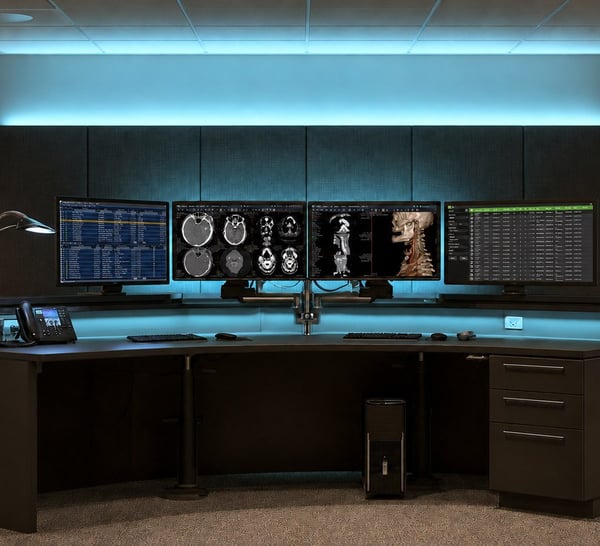
Digital Pathology, Extended Across the Enterprise
Whole slide images archived like every other study and opened in the browser — so pathology reaches the whole care team without disrupting the lab.
Pathology Shouldn’t Stay Locked in the Lab
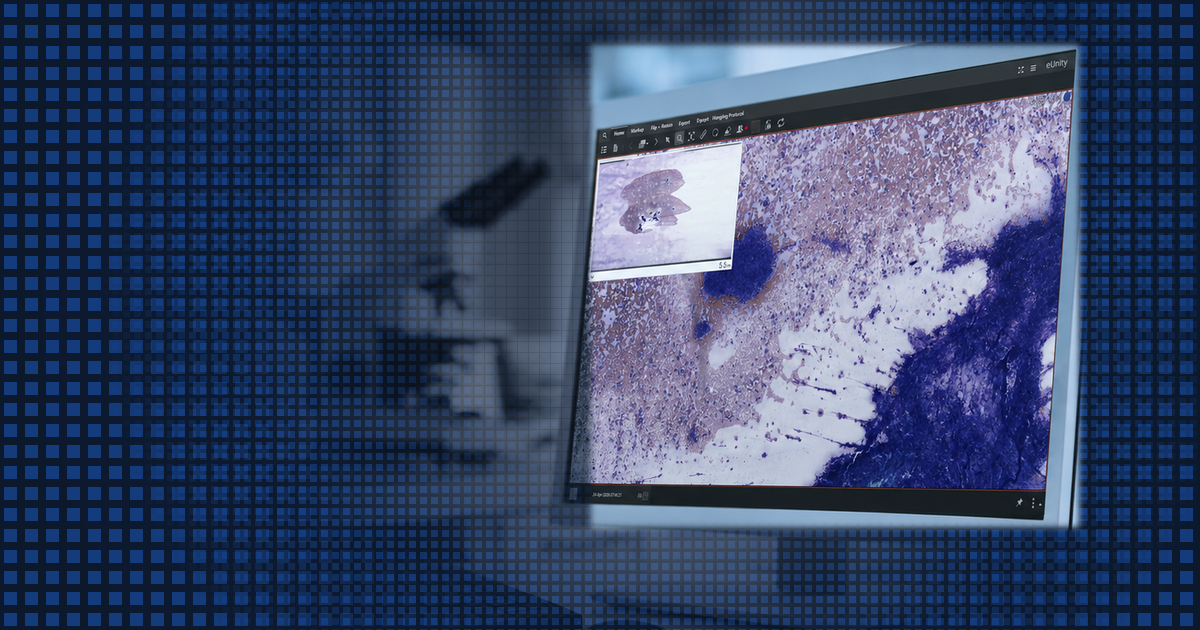
Whole slide images are the largest objects in medical imaging, and they usually live where they were scanned — in a slide management system the rest of the enterprise cannot reach. So tumor boards work from screenshots, referring physicians get a report without the picture, and a second opinion still means shipping glass. Mach7 changes where the slides live and who can reach them: the vendor-neutral archive holds WSI as standard DICOM, and eUnity serves it to any browser for reference and referral.
SLIDES TRAPPED IN THE LAB?
Archive whole slide images in the same vendor-neutral archive as radiology, under one index of record.
NO IMAGES FOR THE CARE TEAM?
Give tumor boards and referring physicians access to the slide itself, not a description of it.
SPECIALIZED SOFTWARE EVERYWHERE?
Open slides in a browser — nothing to install, nothing stored on the device.
One Record for Radiology and Pathology
One Archive, One Index of Record
Not a separate pathology archive. The same one.
Whole slide images are the largest objects in medical imaging, and most archives still treat them as someone else’s problem — filed in a slide management system built for the lab, not the enterprise. Mach7 EIP 2026.1 adds certified support for DICOM VL Whole Slide Microscopy Image Storage, so pathology slides archive, route, and retrieve exactly like any other DICOM object — no separate silo to run, no separate system to secure.
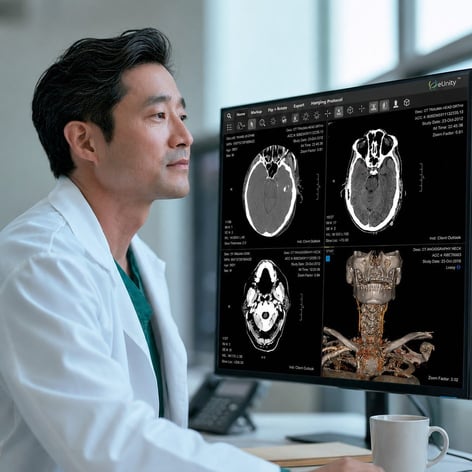
eUnity streams those slides in the browser at pathology scale, without staging gigabytes onto the endpoint. Tumor boards, referring physicians, and consulting specialists reach the same slide from wherever they sit — for reference and referral, not primary diagnosis.
Pathology in the Enterprise Imaging Record
Certified WSI Archiving
Mach7 EIP 2026.1 adds certified support for DICOM VL Whole Slide Microscopy Image Storage. Archiving, routing, and retrieval of SM/WSI objects work exactly as they do for every other DICOM object — no separate pathology silo to run.
Zero-Footprint Access
Nothing to install and nothing to maintain. eUnity runs in a modern browser on desktop, laptop, or tablet, and stores no image data or patient information on the device.
Built for Slide-Sized Data
Whole slide images are streamed rather than downloaded, so navigation, zoom, and pan stay responsive without staging gigabytes onto the endpoint or building out local storage.
One Viewer, Every Specialty
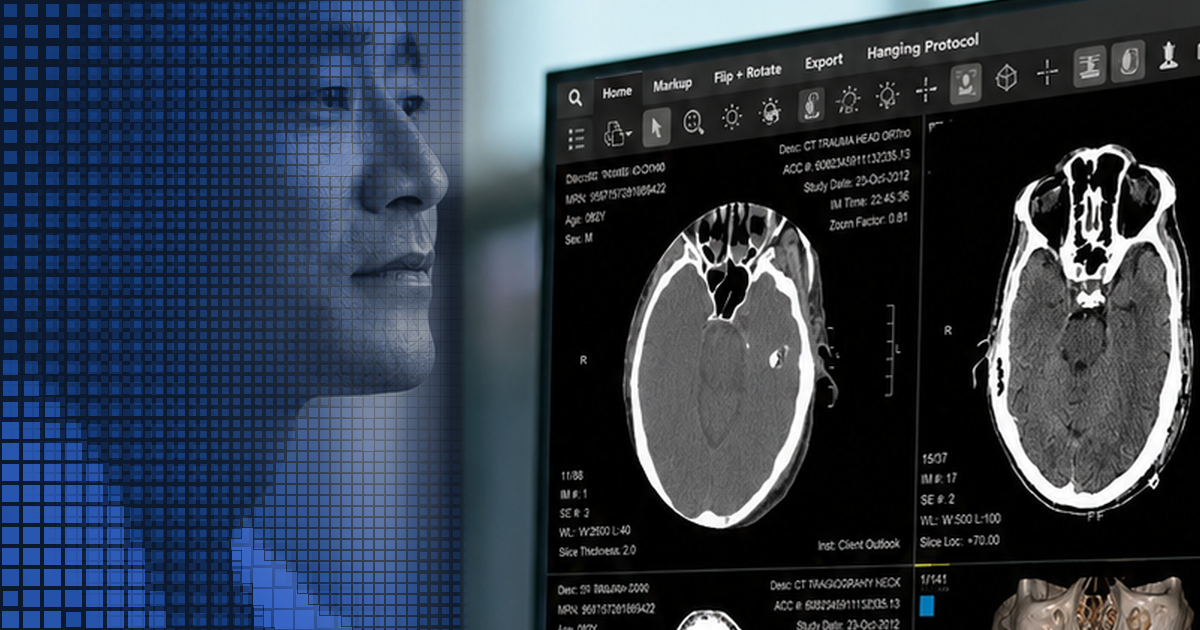
Pathology opens in the same enterprise viewer as radiology, cardiology, and the rest of the imaging record — against one patient history instead of a system per specialty.
Digital pathology whole slide imaging is available in the United States only, for reference and referral use, and not for primary diagnosis.
Vendor-Neutral by Design
Standards-native storage with no proprietary internal format, so scanners, slide management systems, and viewers can come from different vendors — and can be changed without renegotiating the rest of the stack.
Collaboration Across Sites
Multidisciplinary teams, referring physicians, and consulting specialists reach the same slide from wherever they sit, supporting tumor boards, referral workflows, and case discussion across organizations.
Deliver Value for your Patients
Archive — Enterprise Imaging Platform & VNA
- Zero-footprint diagnostic-quality clinical viewer
- Utilized by referring physicians, clinicians and general users
- Integrates data from any source
- Completes EMR with a full imaging history
- Toolset to support clinical subspecialities
View — eUnity Enterprise Viewer
- Zero-footprint diagnostic viewer
- Advanced reading features and toolsets
- Utilized by providers for diagnostic interpretation
- Supports teleradiology and telehealth services
- Inherent clinical workflow to support diagnostic confidence
- Full mammography reading
Share — Across the Enterprise
- Consolidates viewing solutions
- Connects siloed data repositories
- Improves clinician satisfaction and efficiency
- Provides a vendor-independent viewing platform
- Displays patient’s complete imaging history
- Supports diagnostic confidence
- Robust interoperability to EMRs and external systems
Where Pathology Fits in Your Imaging Strategy
Enterprise Imaging Platform & VNA
The open imaging data layer: archive, workflow engine, worklist, lifecycle management, and migration tooling in one standards-native foundation — now including certified VL Whole Slide Microscopy Image Storage.
eUnity Enterprise Viewer
Mach7’s zero-footprint viewer, reading across specialties from a single patient imaging history.
Digital pathology whole slide imaging is available in the United States only, for reference and referral use, and not for primary diagnosis.
Use Cases Across the Enterprise
-
MDT meetings and tumor boards — review pathology alongside radiology in the same session, from one viewer.
-
Referring physician access — share the image that supports the report, not just the report.
-
Consultation and second opinions — give an outside specialist secure access without shipping glass or duplicating the archive.
-
Education and training — open teaching cases to residents and students without provisioning pathology workstations.
-
Cross-site access — one imaging record across every facility in the network.
Frequently Asked Questions
-
Can Mach7 archive whole slide images?
Yes. Mach7 EIP 2026.1 has certified support for DICOM VL Whole Slide Microscopy Image Storage. Archiving, routing, retrieving, and viewing workflows for SM/WSI objects are consistent with how the platform manages every other DICOM object.
That means slides use the same archive, the same routing rules, and the same lifecycle and retention policies as the rest of your imaging — not a parallel system.
-
Can pathology images be used for primary diagnosis?
No. Viewing digital pathology whole slide imaging in eUnity is for reference and referral use only and is not intended for primary diagnosis. Digital pathology functionality is currently available in the United States only.
The intended use is enterprise access and collaboration — tumor boards, referring physician communication, consultation, and education — alongside, not in place of, the pathologist’s primary reading environment.
-
Does this replace our LIS or slide management system?
No. Mach7 does not replace the laboratory information system, the scanner, or the pathologist’s primary workflow. It extends access to the images those systems produce, so the rest of the enterprise can reach them.
The lab keeps its workflow; the enterprise gains the image.
-
What does a pathologist or clinician need installed?
Nothing. eUnity is zero-footprint: it runs in a modern web browser with nothing installed on the endpoint, so users reach slides from a desktop, laptop, or mobile device without a dedicated workstation. No image data or patient information is stored on the device, and communication is encrypted.
For the current supported browser, operating system, and mobile version matrix, contact your Mach7 representative.
-
Where is digital pathology available?
Digital pathology whole slide imaging support in eUnity is currently available in the United States only. Regulatory status and cleared indications for use vary by market.
For current clearance documentation for your region, contact your Mach7 representative or Mach7 Regulatory Affairs.
Bring Pathology Into One Imaging Archive
See how whole-slide imaging fits alongside radiology in a single platform.
Request a DemoeUnity is a diagnostic viewer intended to display medical images and associated clinical reports to aid in diagnosis by trained healthcare professionals. Professional and prescription use only. In the United States only, eUnity supports digital pathology whole-slide imaging (WSI) for reference and referral use and is not intended for primary diagnosis. Mammography and digital breast tomosynthesis are not intended for diagnostic interpretation on mobile devices. Mach7 Enterprise Imaging Platform is intended for archiving, communicating, and viewing medical imaging data. Its built-in viewer is non-diagnostic and is used for reconciliation and quality control; diagnostic viewing is provided by eUnity, a separate product in the Mach7 family. Product availability, regulatory status, intended use, and feature availability may vary by country, region, and care setting.