

Beyond the Monolith: Integrating Pathology and Other “Ologies” into a Specialized Enterprise Imaging Strategy

Why the one-system-does-everything model is breaking down—and what a modular, standards-based approach looks like instead.

A SIIM Industry Connect panel hosted by Mach7 Technologies

Watch the complete ~50-minute panel discussion and audience Q&A above.

Healthcare imaging is growing faster than the systems built to hold it—not just in volume, but in variety. New image types, new consumers, and new specialties are arriving on the scene, and the traditional approach of routing everything through a single centralized platform is starting to show its seams.

At a recent SIIM Industry Connect session hosted by Mach7 Technologies, a panel of clinical and industry leaders explored what comes next. Moderated by Mike Moore, Mach7’s VP of Growth and Market Development, the panel featured Dr. Marc Kohli, MD, FSIIM, Professor of Radiology and Biomedical Imaging and Medical Director of Imaging Informatics at UCSF Health; Michael Valante, MBA, enterprise imaging subject-matter expert and SIIM Enterprise Imaging Committee member; Andrew Volkening, VP of Product at Mach7; and Barinder Dhillon, Product Manager at Mach7. Here are the themes that defined the conversation.

The Monolith Wasn’t Built for This

By “monolith,” the panel meant the familiar model in which one centralized system is expected to manage, orchestrate, and deliver every imaging workflow across the enterprise. The problem, Dr. Kohli explained, is that clinical workflows are deeply idiosyncratic. “The needs for a cardiologist…are very different from how radiology is deployed, are very different from how pathology is deployed,” he said. “Having a single solution that essentially tries to force all of those into a lowest common denominator is something that’s not going to be palatable.”

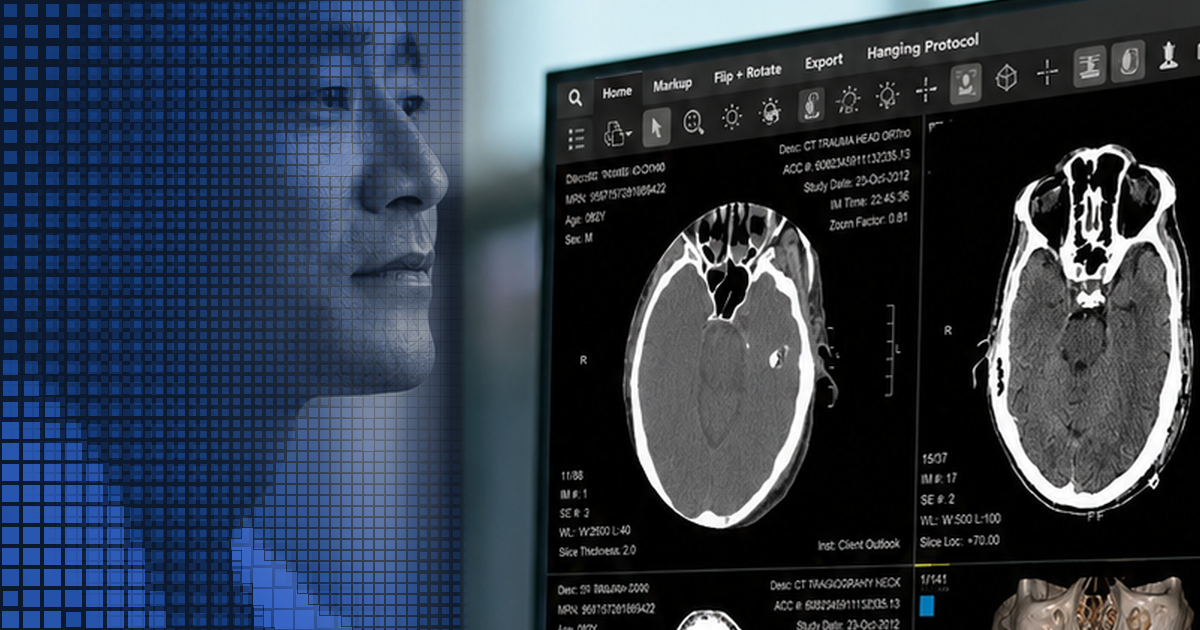
Compounding the issue is sheer scale. Physician shortages across image-producing specialties are pushing interpretation volumes up—Dr. Kohli estimated his own reading volume has grown one-and-a-half to two times—while file sizes balloon as devices grow more sophisticated. As Volkening put it, the growth in data “way outpaces just the small raise in the number of cases.” Architectures designed for a previous era simply weren’t built to flex that far.

Imaging Is an Enterprise Asset, Not a Departmental One

A recurring theme: as organizations digitize more of their imaging footprint, they consistently underestimate who actually consumes the data. Valante noted that the consumer base is expanding alongside the data itself—clinicians, researchers, educators, patients, and increasingly AI all want access, and each consumes data differently. “The research organizations consume that same data very differently than clinicians do,” he said.

That reframing matters. “Once we acknowledge that images and imaging more broadly is an enterprise asset, not a series of departmental assets,” Valante argued, “then you start reframing how you think about how that data should be shared, contextualized, leveraged…and ultimately managed and stored and protected.” Volkening sharpened the point: too many teams ask “how do I store this data?” when the right question is “how do I leverage this data?”

Pathology Exposes the Cracks

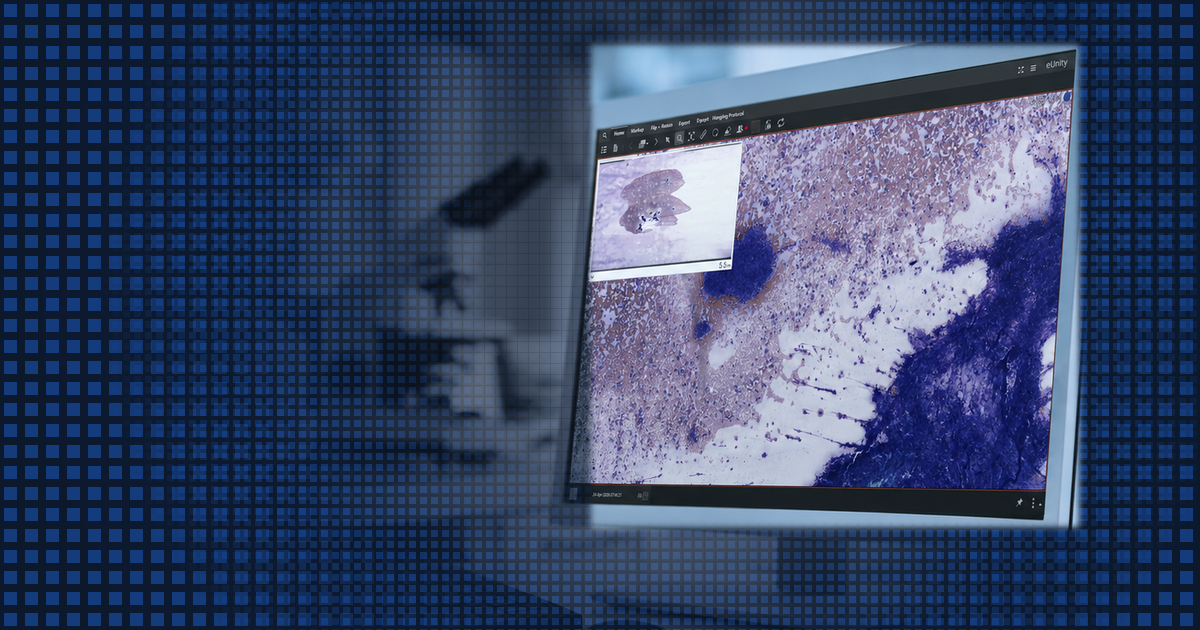
Digital pathology has become the forcing function. It brings massive file sizes, new constructs like image tiles rather than frames, and metadata that radiology systems were never designed for. As Volkening noted, “What is an accession number in radiology doesn’t exist in pathology—you have case numbers.”

The deeper challenge is conceptual. Dhillon described the need to marry pathology’s specimen-centric workflow with the patient-centric model the rest of the enterprise runs on. A radiology study is typically opened, read, and signed by one person in minutes; a pathology case may pass through multiple hands and require additional stains before sign-out—breaking assumptions baked into radiology-era worklists. “We need to try to uncover where are our blind spots,” Dhillon said, “the things that made total sense for this ology but don’t make any sense for that ology.”

Don’t Chase a Common Workflow—Build a Common Platform

The panel was emphatic that the answer is not to standardize everyone onto one workflow. “It is not about finding a common workflow,” Valante said. “That will only lead to the least common denominator, which by definition won’t be optimal for anybody.” The goal instead is a platform that lets different specialties work in the way that suits them while sharing a common set of data.

Equally important is resisting the urge to digitize a bad analog process. As Volkening cautioned, you don’t want to “recreate an analog workflow with digital tools”—that just magnifies existing inefficiency instead of eliminating it.

A Standards-Based, Modular Architecture

So how do you modularize without drowning in complexity? Volkening’s guidance: start with a standards-based approach. Many organizations default to a monolith because they fear the overhead of many systems—but a standards-based architecture “lets you put the right tools in at the right time.” It also means defining clear systems of record and a single source of truth for imaging. “Maybe your every system isn’t future-proof,” he said, “but your architecture is.”

Dhillon added a sharp counterpoint to the “monolith feels safer” instinct: a bespoke architecture doesn’t remove complexity so much as shift who bears it—often from the IT silo onto expensive clinical providers. The risk, he argued, has to be evaluated holistically across the organization, not just within IT. And on DICOM as the interoperability fabric for whole-slide imaging, Valante was direct: it’s less mature than in radiology, but “the list of the things that it provides you is significantly longer than the things that you still have to be teased out.”

Collaboration, AI, and the Second-Order Wins

Dr. Kohli credited collaboration as the real engine behind UCSF’s success—spanning clinical teams, IT, and industry partners. “I spend probably 80 to 90% of my effort on people and relationships,” he said, noting that the enterprise imaging community has often been “out in front” of the market in recognizing that value.

The conversation also surfaced AI as a new and demanding consumer of data—one with its own access patterns—and the rising importance of data orchestration to make unstructured imaging usable for secondary purposes like research and model training. That, in turn, elevates an emerging standards gap: trustworthy, robust de-identification of medical image data. The throughline, echoed in a lively audience Q&A on POCUS and regulatory nuance: understand your true current state, find the right clinical champions, and design for how each specialty actually works.

The Takeaway

The future of enterprise imaging isn’t one system to rule them all, nor a lowest-common-denominator compromise. It’s a modular, standards-based foundation that treats imaging as a shared enterprise asset—flexible enough to welcome pathology and every other “ology” on its own terms, while delivering a unified view of the patient. Watch the full panel above for the complete discussion and audience Q&A.

Mach7 Technologies helps health systems build vendor-neutral, standards-based enterprise imaging strategies. To learn more about designing a modular imaging architecture, visit mach7t.com.